

Data Centers, Development, and Dispossession In Pennsylvania
The Eco-Update #23


What’s In This Issue
The Data Center Fight Comes to Southeastern Pennsylvania
Capitalist Oil and Gas Extraction in Southwestern Pennsylvania
Letter from the editor
Other Eco-Stories In The News
Eco-Poetry Review: There Are Still Woods
Something You Can Do: Help spread the word about the fight against Pennhurst AI
The data center fight comes to southeastern Pennsylvania
By Ben Lockwood

In southeastern Pennsylvania, community members of East Vincent Township are fighting against a local property owner’s plans to construct an AI data center.
Pennhurst AI has proposed a 1.3 million square feet campus with multiple data center buildings and onsite power generation. While the company has tried to tout the supposed economic benefits the project would bring to the community, its plans have ignited fierce opposition to the proposal amid increasingly tense townhalls over potential zoning and ordinance changes.
In November, Pennhurst AI sent postcards to East Vincent residents claiming that the data center will bring as many as “250 permanent six-figure jobs for high school grads”, but many community members are skeptical, and with good reason, given that many data centers employ far fewer people than what Pennhurst AI is promising.
Several local groups are now organizing a coordinated opposition to the project. East Vincent Advocacy has been educating the public about the negative environmental, economic, and resource impacts these data centers bring to the areas in which they’re being constructed.
The Chester County chapter of the Democratic Socialists of America (DSA) has also been organizing alongside East Vincent Advocacy in opposition to the proposed data center. By creating their own counter-educational materials and encouraging community members to attend townhall meetings, the chapter is mobilizing a campaign aimed at delaying the project, hoping to eventually stop it altogether.
“99% of the community is against this data center,” said Dylan H., a local resident and Chester County DSA Co-Chair.
While the majority of the public in East Vincent don’t appear to support the project, there is one group that does. Despite the potential harms to the community, local AFL-CIO unions, Steamfitters Local 420 and IBEW Local 98, have consistently appeared at townhall meetings in support of the Pennhurst AI plan and the temporary jobs it might bring. At one meeting, a member of IBEW Local 98 was shouted down by other attendees while attempting to speak in support of the project.
On local union support of the data center, Dylan H. said, “It’s been disappointing to see these unions throw their fellow working class community under the bus in favor of corporate interests.” Elsewhere, data center construction has come under increasing scrutiny from labor unions for relying on non-local and non-unionized workers.
After a contentious few months, the Pennhurst AI data center plans appear to be on hiatus until the spring when the East Vincent Township will hold a hearing for formal approval. Both East Vincent Advocacy and Chester County DSA are working to acquire “party status”, which grants the ability to participate in the hearings, and creating a how-to guide to inform community members how they can do the same. Chester County DSA is also interviewing local community members who want to speak out on the ways this project will harm the East Vincent region.
The hearing is tentatively scheduled for March of 2026, and organizers hope to prepare a variety of oppositional tactics. As struggles over data center plans proliferate, each fight is an opportunity to learn how to win.
Capitalist oil and gas extraction in southwestern Pennsylvania
By Ben Lockwood
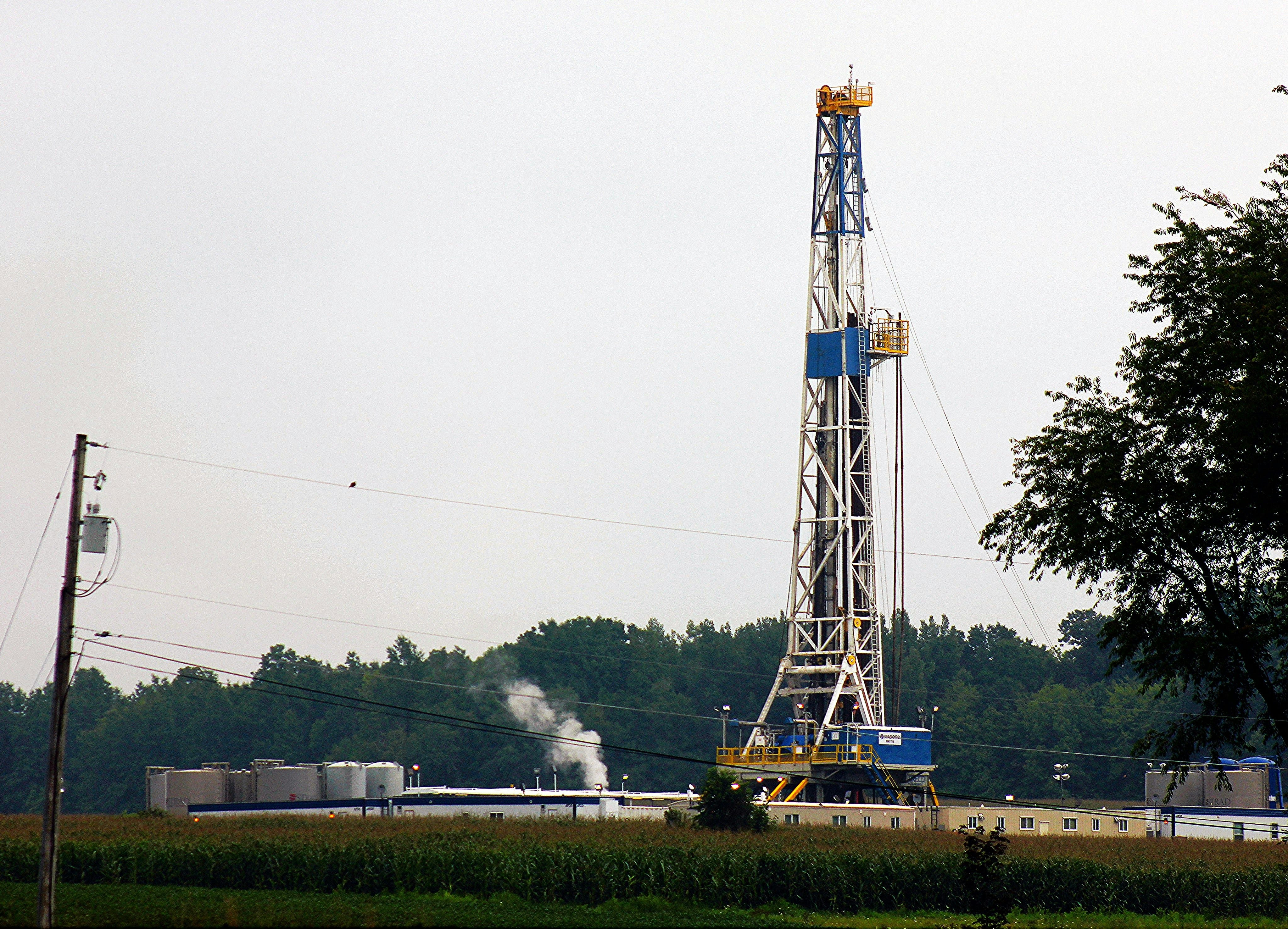
As southeastern Pennsylvania fights the construction of data centers, oil and gas developers are engaged in extractive and exploitative production across the southwestern portion of the Keystone State.
A new study published in Antipode highlights the ways the unconventional oil and gas development (horizontal drilling combined with hydraulic fracturing) has contributed to environmental degradation and land dispossession in the region. Researchers from the Department of Geography at The Pennsylvania State University mapped this extractive energy infrastructure and conducted interviews to “examine the changing dynamics of private property in these cycles and its central role in the latest phase of extraction.”
The major conclusion of the study is that this form of industrial extractive energy production has changed the socioecological relationships of southwestern Pennsylvania in new ways. Unlike previous extractive industries like coal and oil, this unconventional oil and gas development relies on the participation of private property owners who lease extraction rights to developers in order to access underground resources.
This, authors Owen Harrington and Jennifer Baka argue, both “hardens and hollows out” private property rights while dispossessing others of land altogether. On one hand, the lease contracts formalize the rights of property owners, while simultaneously deepening the dependence of property owners on outside economic forces. When market dynamics lead to lower natural gas demand and prices, property owners receive lower royalty payments from the resources extracted from their land. This, in turn, can create an incentive to allow more drilling, thus further increasing property owner dependence. Furthermore, the increasing automation of the industry leads to increased unemployment as more land is devoted to unconventional oil and gas production.
In addition to these economic dynamics, unconventional oil and gas development also degrades the surrounding environment. Land surfaces can drop in areas where “longwall” mines are extended, potentially causing the disruption of underground springs. So the combined effects of this growing industry are environmental degradation of land that increasingly generates less income for property owners while simultaneously increasing their dependence on that same industry.
What’s more is that these dynamics are spreading across Pennsylvania and the Appalachian region in general. The authors of the study state that more research of this kind is needed to shed light on the local impacts of extractive industry’s ties to a global, capitalist market.
Letter from the editor
Dear Reader,
Legacy media continues to bend the knee to authoritarian censorship and billionaire interests. The Eco-Update remains a free and independent source of environmental news. Support from regular people like you helps it stay that way. By becoming a paid subscriber you can help keep the lights on, the coffee brewing, and the words flowing.
Thanks,
-Ben
Other Eco-Stories In The News
The Guardian: They survived wildfires. But something else is killing Greece’s iconic fir forests
Futura: When coral reefs collapse, Earth reacts in ways no one saw coming
Eco-Poetry Review: There Are Still Woods, by Hila Ratzabi

“There are still woods,” is the title of Hila Ratzabi’s 2022 poetry collection. What does that mean? The are woods that remain? That are woods that are still? There are woods that remain still? I think this collection all of those things, and none of them, at the same time.
I struggled with how to approach this review because until recently I have not engaged much with poetry. But I found much to engage with in Ratzabi’s words. The imagery often evokes what it feels like to be in the nature, but other times the poems feel like reading a painting.
But it’s not just the imagery of There Are Still Woods that fascinated me. Ratzabi also explores Indigenous mythology, science and magic, the silence of winter in the north, and the existential dread of ecological collapse. These threads intertwine with personal reflections on life, parenting, love, and Ratzabi’s own search for god in nature. These poems swim in deep, cold water. I recommend taking the plunge.
Something You Can Do: Help spread the word about the fight against Pennhurst AI
The spread of AI data centers thrives on secrecy. These companies know that people don’t want their artist-plagiarizing chatbots, don’t want their job-eliminating automation machines, and don’t want their resource-hogging data centers in their communities. They rely on people not knowing the extent to which this technology is creeping into every aspect of our lives. Fight back by spreading the word: The East Vincent, PA community is taking up the fight against Pennhurst AI
The fight against data centers is also occurring here in York and Lancaster counties too. Already our electric bills have doubled (and rising) and for anyone on municipal water, it's the same story. We also have projects like Cuff's Run to worry about. The oligarchs see us as inconvenient obstacles to mavigate in what is otherwise an ecological sacrifice zone.