
Roadside Verges: An Underrated Resource for Pollinators
by Chris Wyver
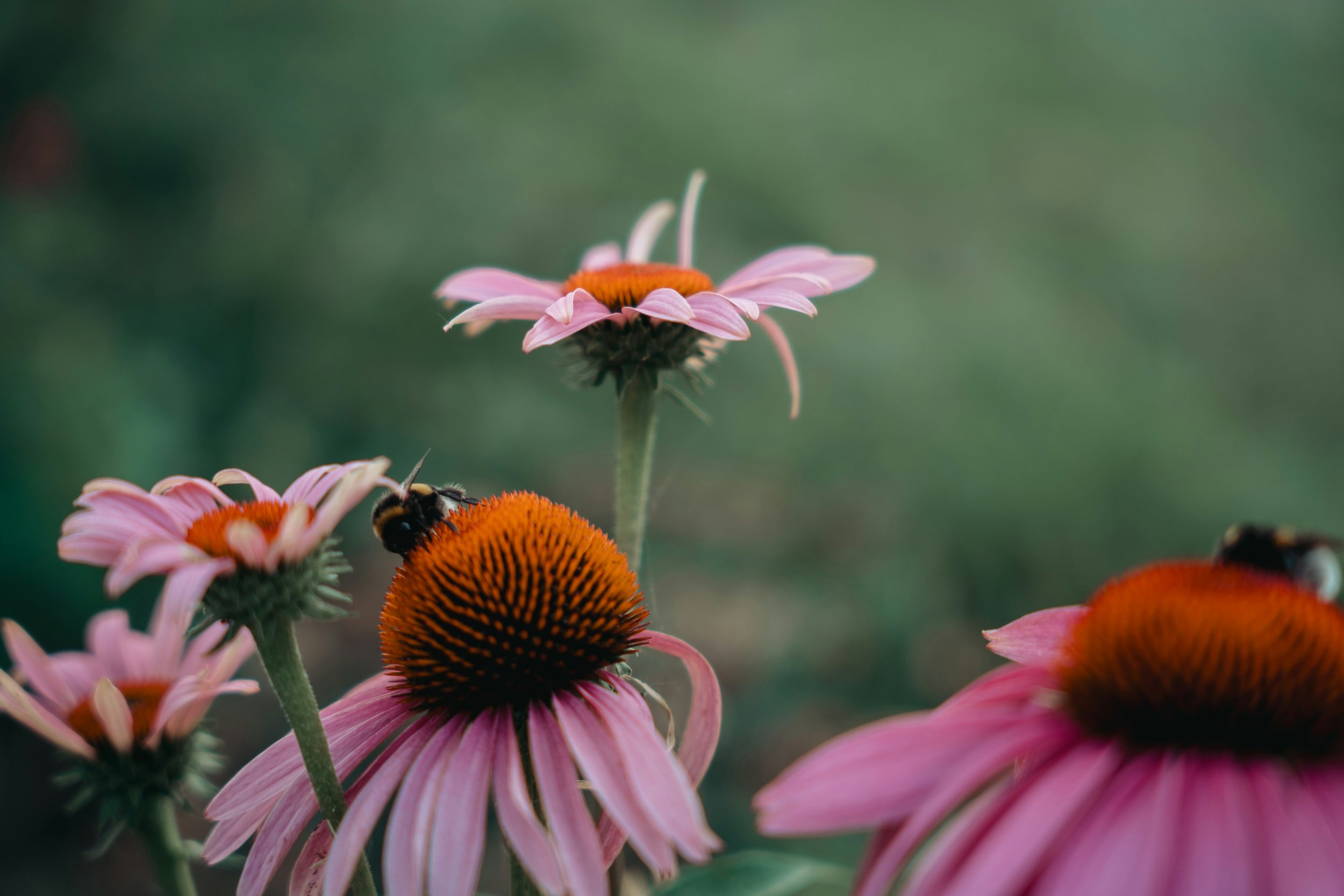
Photography by Emanuel Haas
You've almost certainly driven past one without a second glance: the strip of vegetation running alongside the road, often mown with little consideration and treated as leftover space rather than habitat. I confess I used to think along similar lines, until I spent a season surveying exactly these margins across five countries as part of SAFEGUARD, a pan-European project set up, in part, to investigate underrepresented threats to, and potential overlooked opportunities for, pollinators–including the benefits of road verges, and associated risks posed by traffic. What I found has changed how I see them, because it turns out these overlooked margins may be an underrated resources for pollinators.
Back in 2023, field teams surveyed 144 roadside sites across six regions in five countries – the UK, Belgium, Germany, Serbia, and Estonia – walking the same stretches of verge three times over a single season. We counted every bee, butterfly, and hoverfly we saw, noted which flowers each insect visited, and combined this dataset with real traffic data, including how busy each road was and how fast vehicles were travelling. Nearly 11,000 pollinators and 293 species later, a few clear patterns emerged.
Floral resources are the strongest driver of pollinator activity. This finding feels intuitive once stated plainly, but the scale of the effect was striking. Verges rich in nectar-producing flowers did not simply support a few more insects – they supported noticeably more bees, butterflies, and hoverflies, and a wider range of species too. Doubling the amount of nectar sugar on offer was enough to increase bee numbers by nearly 40%. For anyone managing a verge, or indeed any patch of ground, the implication is straightforward: greater floral abundance and diversity translates directly into greater pollinator abundance and diversity.
Traffic speed, not traffic volume, limits the benefit of flowers. Here the results were more counterintuitive. One might assume a busier road would be worse for pollinators than a quiet one. Yet traffic volume made no measurable difference at all. What mattered was how fast vehicles were travelling. Bees and butterflies were noticeably scarcer alongside fast roads, doubling the traffic speed roughly halved their numbers. The likely explanation is not noise or exhaust (although these factors likely do impact pollinators to some degree), but turbulence: the buffeting created by speeding vehicles appears to make it harder for insects to fly and forage steadily. Hoverflies, interestingly, were unaffected, likely owing to their rapid flight-stabilisation response.
So, what does this mean in practice?
The practical message is refreshingly low-tech: reduce mowing frequency. Allowing wildflowers to establish, removing cuttings so nutrients do not accumulate, and varying mowing times and heights can transform a verge from a species-poor grass strip into genuine habitat. Removing cuttings matters because many wildflowers thrive on low-nutrient soil, whereas cuttings left to rot down enrich the soil and favour a handful of fast-growing, coarse grasses that outcompete wildflowers. The benefits of this management can appear quickly, sometimes within a single season.
The practical message is refreshingly low-tech: reduce mowing frequency. Allowing wildflowers to establish, removing cuttings, and varying mowing times and heights can transform a verge from a species-poor grass strip into genuine habitat. Removing cuttings matters because most wildflowers actually thrive on poor, low-nutrient soil, whereas cuttings left to rot down enrich the soil and favour a handful of fast-growing, coarse grasses that outcompete them. The benefits can appear quickly, sometimes within a single season.
Given that verges cover a substantial area of land (over 2,000 km² in Great Britain alone), I would suggest a sensible prioritisation: focus flower-friendly management on verges alongside slower, quieter roads first, where disturbance is lowest and pollinators are most likely to benefit. This offers a pragmatic way to maximise ecological return from limited budgets, rather than attempting to transform every roadside at once.
None of this suggests that speed limits should change for the sake of pollinators, nor should we let wildflowers interfere with driver visibility at junctions. But it does support the case for treating road verges as a genuine ecological resource, as land we already own and maintain, and one that could become one of the more effective, low-cost interventions available for supporting pollinator populations.
The next time you pass a stretch of unmown road verge, it may be worth a second look. It might be doing more ecological work than its appearance suggests.
Chris Wyver is a post-doctoral researcher at the University of Reading working on the AGRI4POL project. His research focusses on the threats and opportunities to pollinators, with a particular interest in crop pollination in a changing climate.