
March 2026
Dual Ecologies
What’s In This Issue
Letter from the Editor | Ben Lockwood
Terraforming Erasure | John Maerhofer
Precision vs Accuracy in the Anthropocene | Ben Lockwood
Nature Photo of the Month | Rosalie Godefroy
Notes From A Radical Ecologist: Growing Community | Sam Myers
Eco Fiction Review: What A Fish Looks Like | Ben Lockwood
More from Brief Ecology in March
Did you know The Eco Update is also available as a digital magazine?
letter from the editor
Readers,
Nature does not exist in dualities, but our ideas often do. Ecofascism or Ecosocialism, profit or the planet, fixing Earth or leaving it behind, land or sea, human or nonhuman. The pages of this month's issue of The Eco Update explores all of these binaries, as well as the spaces between them.
What can we learn from categorizing the world in this way? What can we learn from separating these categories, mixing them up, and then doing it over? Are the categories helpful? Are they even real? I don't think you'll find the answers to these questions in this issue, but I hope you'll at least find some new ways to think about them.
In Solidarity,
-Ben
Terraforming Erasure
Agrilogistic Violence and the Political Economy of Eco/Neofascism
by John Maerhofer
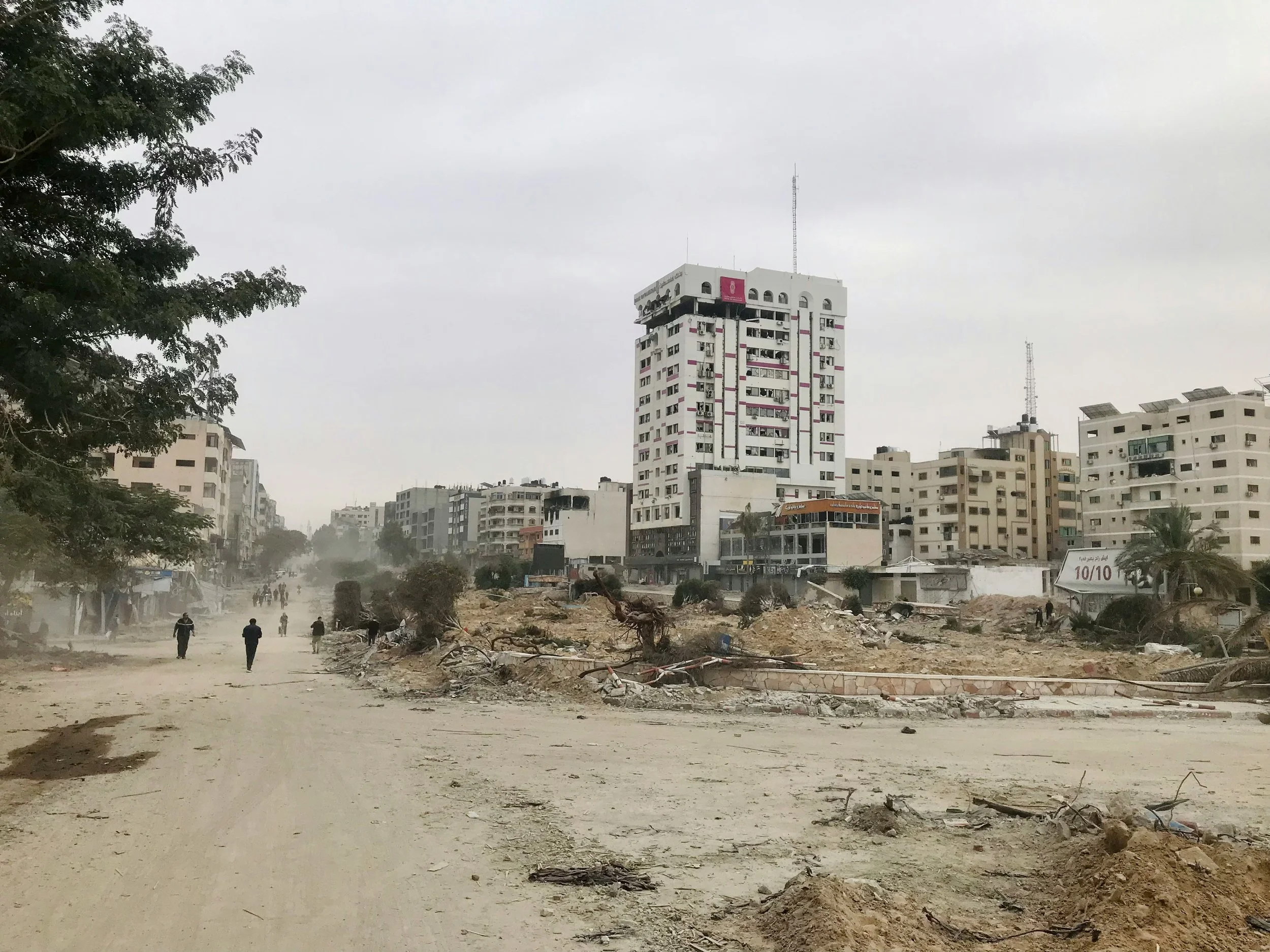
Photo by Emad El Byed
Agrilogistics can be described as the reordering of nature, which lays the groundwork for social hierarchies and allows power to expand through controls of capitalist reproduction. In this process, ways of living rooted in reciprocal relations among people, land, and nonhuman life are desiccated to build “civilizational” infrastructures that align with perpetual expansion. Practices like soil stewardship, agroecological knowledge, and Indigenous permaculture, once aligned with the Earth’s rhythms, continue to be brutally exorcized by extractive systems that treat nature as an input, disrupting soil-human entanglements and the interface between human and nonhuman life-systems. This chaotic social form generates surplus in ways that bind subjects to matrices of domination and the continuous crises of capital, revealing the perverse symmetry of the entropic Anthropocene under globalized neofascism, wherein annihilation is recast as planetary management, destruction reframed as resilience, and extinction streamlined into racialized border regimes.
As I outlined in my recent article in Capitalism Nature Socialism, agrilogistics provides a framework for understanding the infrastructural requirements of the eco/neofascist political economy, showing that our current political context is not an aberration within an otherwise stable system; rather, it is the logical outcome of what I call the process of terraforming erasure, which transforms land, labor, and life into units available for extraction and consolidation for the new global billionaire class. Consistent with what William Robinson labels “militarized accumulation,” terraforming erasure gestures toward the historic arc through which ecologies are rewritten to serve the imperatives of systemic power, and how imperial regimes enhance tactical annihilation strategies to reposition class power across geopolitical space. Beyond Robinson’s categorical definition, this mechanism also symbolizes how the reproduction of capitalist nature often dovetails with practices of ethnic cleansing and the destruction of life-supporting ecologies for entire populations now being transformed, as evidenced by the ecocidal genocide in Gaza and the imperial extermination campaign spearheaded by the US/Israel axis.
Given the current trajectory of impending global catastrophe, we can trace three ways agrilogistic violence bolsters the eco/neofascist political economy:
1. Terraforming erasure underlies new modalities of accumulation, turning aggregate nature into abstract labor, and reinforcing eco/neofascist rule over all productive capacity. In doing so, it produces and exploits universal underdevelopment, using instability not as a byproduct but as a deliberate tool for reinforcing the dominance of the reconsolidated ruling class.
2. Coupled with intensified militaristic genocide and imperial apologia, terraforming erasure is reproduced via big tech predominance, fortifying digitalized dispossession to assume control over coveted resources and genetic materials, all under the guise of progress, efficiency, and border-regime fortification. This creates the necessary societal paralysis that guarantees the violent overreach of the parasitic billionaire class and its lackeys.
3. Building upon the political inertia of an already worn-out working class, the eco/neofascist political economy is rooted in forced compliance, meaning that those on the front lines of struggle against the Capitalocene are acceptable targets of agrilogistic violence. In this sense, the genocide in Gaza was not incidental, but rather inherent to a system that necessitates the erasure of surplus populations as a foundational building block of accumulation.
Despite the dark period of history we are living through, the potential for political reorganization exists. As such, it is not enough to recover ecological relations severed by capitalism; we must ask whether new associative production processes can be built, ones that are healing, relational, and co-evolutionary. This involves reimagining labor not as surplus extraction, but as radical care, regeneration, and everyday militancy.
John Maerhofer is an Assistant Teaching Professor in the Writing Program at Rutgers University, New Brunswick. His recent article, “The Specter of Green Capital,” was published in Capitalism, Nature, Socialism in January 2026. His latest book, Guerrilla Ecologies: Green Capital, Nature, and the Politics of Catastrophe, was released by Routledge in 2024. He is currently working on a critical biographyof Earth First! organizer Judi Bari, tentatively entitled Judi Bari and the Search for Revolutionary Ecology.
Precision vs Accuracy in the Anthropocene
by Ben Lockwood
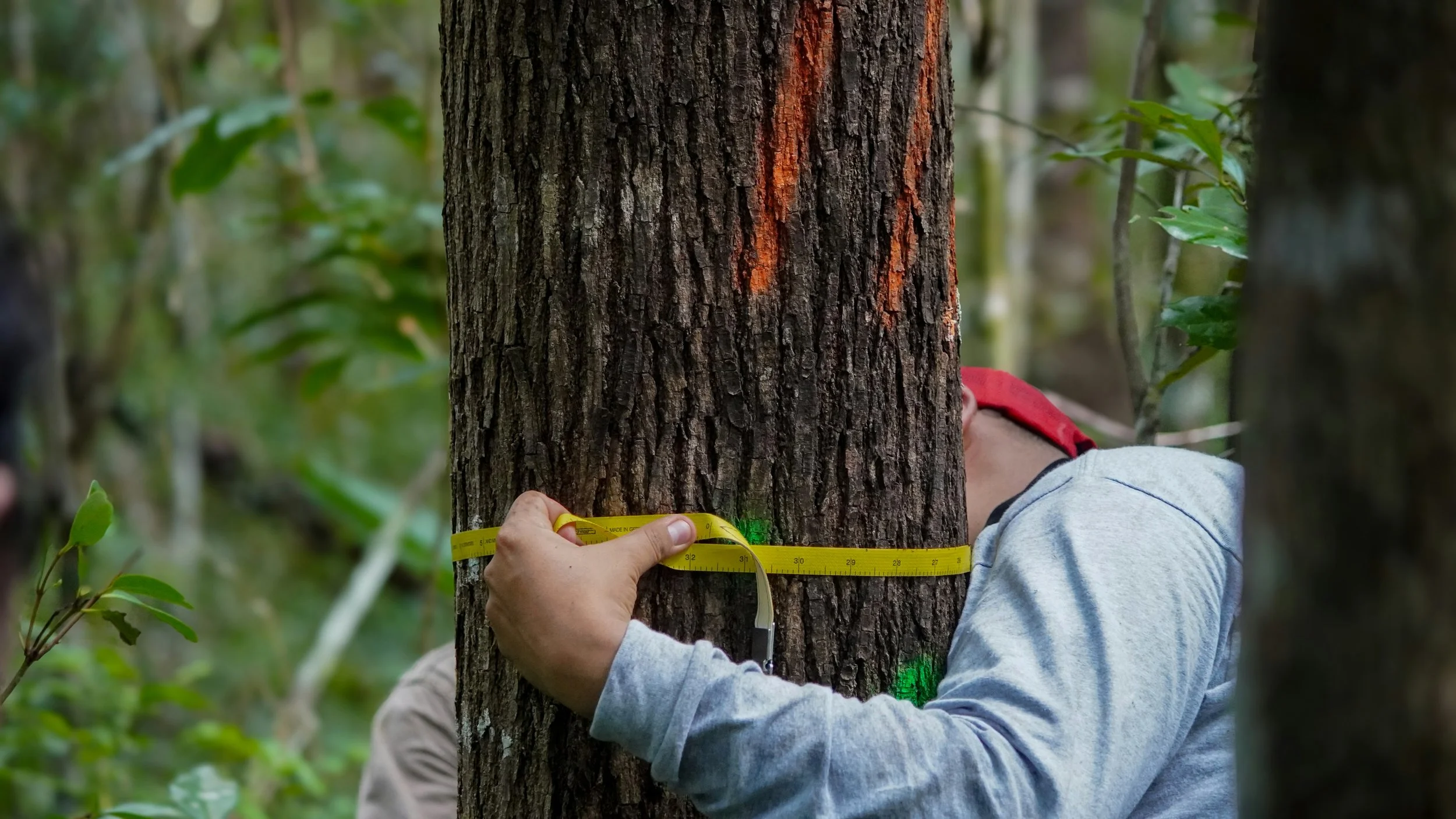
Photo by Guille B
We live in an era of planetary crises. Our climate is changing rapidly, ecosystems are collapsing, species are going extinct, and the planet’s life support systems in general are getting pushed to their limits. Scientists have dubbed this era the “Anthropocene”.
While not an officially recognized geologic epoch, the term “Anthropocene” has nonetheless become common in both popular and scientific publications. The name reflects the dominant role that humans (the “anthro” in Anthropocene) now play in altering and impacting our planetary system. One does not need to be a scientist to know that these impacts and alterations have been overwhelmingly negative. But dismay is particularly strong within academic circles, where scientists often lament society’s inaction on climate change and biodiversity loss. “We know humans are the cause, so why isn’t anyone doing anything?” is a commonly held refrain.
This bewilderment, while understandable, reveals a mistake by scientists who have embraced the “Anthropocene” as a descriptive term: namely, confusing accuracy with precision. Let me explain.
In statistics, accuracy refers to the absence of error in a measurement, or in other words, the degree to which a measurement and the true value are in agreement. Precision, on the other hand, is the exactness, or specificity of the values in a measurement. For example, if you have a jar full of marbles and I guess that the jar contains between 1 and 100,000 marbles, that’s probably accurate, but not very precise. But if I say the jar has exactly 2 marbles, that’s precise but not accurate. The goal of science is to make both accurate and precise measurements, and that’s where science has failed, with respect to the Anthropocene.
It is obviously accurate to say that humans are the cause of our planetary crises. No other species burns fossil fuels for energy, pollutes their environment, or extracts natural resources at the rate that humans do. But is it precise to lay the blame on all of humanity? Absolutely not. Not all humans are equally dominant, exploitative, or responsible. There’s an extreme lack of parity between capitalists and workers, and particularly between the Global North and the Global South. Failing to identify our capitalist economic system as the driver of planetary crises is a failure of measurement precision.
What’s more is that this failure reverberates into the proposed solutions that scientists often put forth. Again, it’s entirely accurate to say that humans, or society, would benefit from reduced carbon dioxide emissions, lower pesticide use, less deforestation, more sustainable development, and so on. But would everyone benefit? Certainly not the wealthy, capitalist class of owners whose companies are responsible for these damaging activities. After all it’s this very extraction that accumulated their wealth in the first place, so it’s not precise to assume that they too would benefit from slowing or stopping it.
In fact, the failure of precision leads to the proposal of policy changes that will never be implemented so long as the capitalist system that allows extreme wealth and power accumulation continues to exist. Capitalism requires the extraction of resources and the degradation of environments. Failing to identify this is a failure of measurement, and until scientists recognize the true cause of our planetary crises they will remain bewildered, confused, and ineffective at addressing them.
Ben Lockwood is an ecologist and geographer at Penn State University. He is also the founder/editor of Brief Ecology. Ben’s writing and research has been published in Nature, Clarkesworld Magazine, Seize The Press, Area, Literary Geographies, and more.
Nature Photo of the Month

Photo by Rosalie Godefroy
Notes From A Radical Ecologist
Growing Community in the Heart of Tech Empire
by Sam Myers

Photo by Jonathan Kemper
The San Francisco Bay Area has had its fair share of grass roots movements crop up over the years, but now more than ever, ambition is growing in places other than the board rooms of Google, and X. So as technocracy attempts to whittle away at the working class’s ability to provide for themselves and widens an ever-increasing highway between ecological harmony and working people, Bay Area Ecosocialists are standing up to bridge the gap.
Growing Community, a series of events organized by ecosocialists of the San Francisco chapter of the Democratic Socialists of America, began in Spring of 2025 as a low-lift project to give chapter members an accessible way to participate in local urban farming, and gardening projects, socialize, and otherwise ‘touch grass’. Over time our Ecosocialist Working Group has expanded the scope of Growing Community’s work to include an education beyond what attendees might learn in a few hours of labor among comrades (and for many attendees these events are among their first steps into organized collective action). Questions about the brutal effects of monopoly on agriculture, the abuses this leads to domestically, and abroad, and how the loss of food sovereignty leads to chaotic breakdowns in food security in our communities are a few of many collective concerns we feel are vitally necessary to discuss.
A huge part of this work has been strengthening the chapter’s relationship with local organizations, such as Alemany Farm, and Hummingbird Farm, that achieve remarkable results on small parcels of public land. Alemany Farm has produced as much as 13 tons of food in a year on a 3.5 acre plot, and provides for many in their community who feel the effects of gentrification, food desert conditions, and punishing austerity. Hummingbird Farm is situated near one of the last remaining pieces of undeveloped grassland in San Francisco and is dedicated to preserving and cultivating an environment in tune with the native plants found there. Respect towards the traditions of those who have felt the violence of colonization, the Ramaytush Ohlone people in this case, is engrained in their practice. These institutions have shared much of their struggle with us, and provided our cadre with keen insight, and unique opportunities to strengthen our community through mutual involvement. Their stories have helped shape our approach to the question of how Ecosocialists can create a better world.
Through organization and education we want to inspire Ecosocialists to stand firm in the face of these powerful, unjust forces, and to envision a revolutionary future. One where people can access wholesome food without question, and where the material constraints of our planet and its inhabitants are recognized and respected with dignity. It’s a future where the technocratic elite no longer dictate the terms, and where working-class ambition, rooted in ecological harmony, seizes an important role.
Follow DSA San Francisco on Bluesky and join us at our next Growing Community event!

Sam Myers is a student of horticulture at City College of San Francisco. You can find them playing in the dirt (professionally), doing activism, or listening to funky music.
Ecofiction Review: What a Fish Looks Like, by Syr Hayati Beker
Review by Ben Lockwood

Cover of What a Fish Looks Like
Syr Hayati Beker’s novella, What a Fish Looks Like, is a wild ride. Published last year by Stelliform Press, the book is an experimental narrative that explores the way relationships transcend space and time against the backdrop of an eco-apocalypse.
The story (loosely) follows the romantic and platonic relationships among a queer community navigating ecological, planetary collapse. A ship is scheduled to leave Earth for a presumably better place, and the central conflict revolves around which community members are leaving, and which are staying.
But all of these details fade into the background of Beker’s narrative, which is told through scribbled notes, letters, napkins, and surrealist fairy-tale retellings. Beker queers the format as much as the characters here, and the result is a love story that skips across time and space.
What a Fish Looks Like is a book that rewards a willingness to let inconsistencies and unresolved questions slide by. It’s water that you immerse yourself in rather than puzzle over, and the payoff is a beautifully sad and hopeful story about what it means to be human, to be in community, and to be in a disaster, all at once.