April 2026
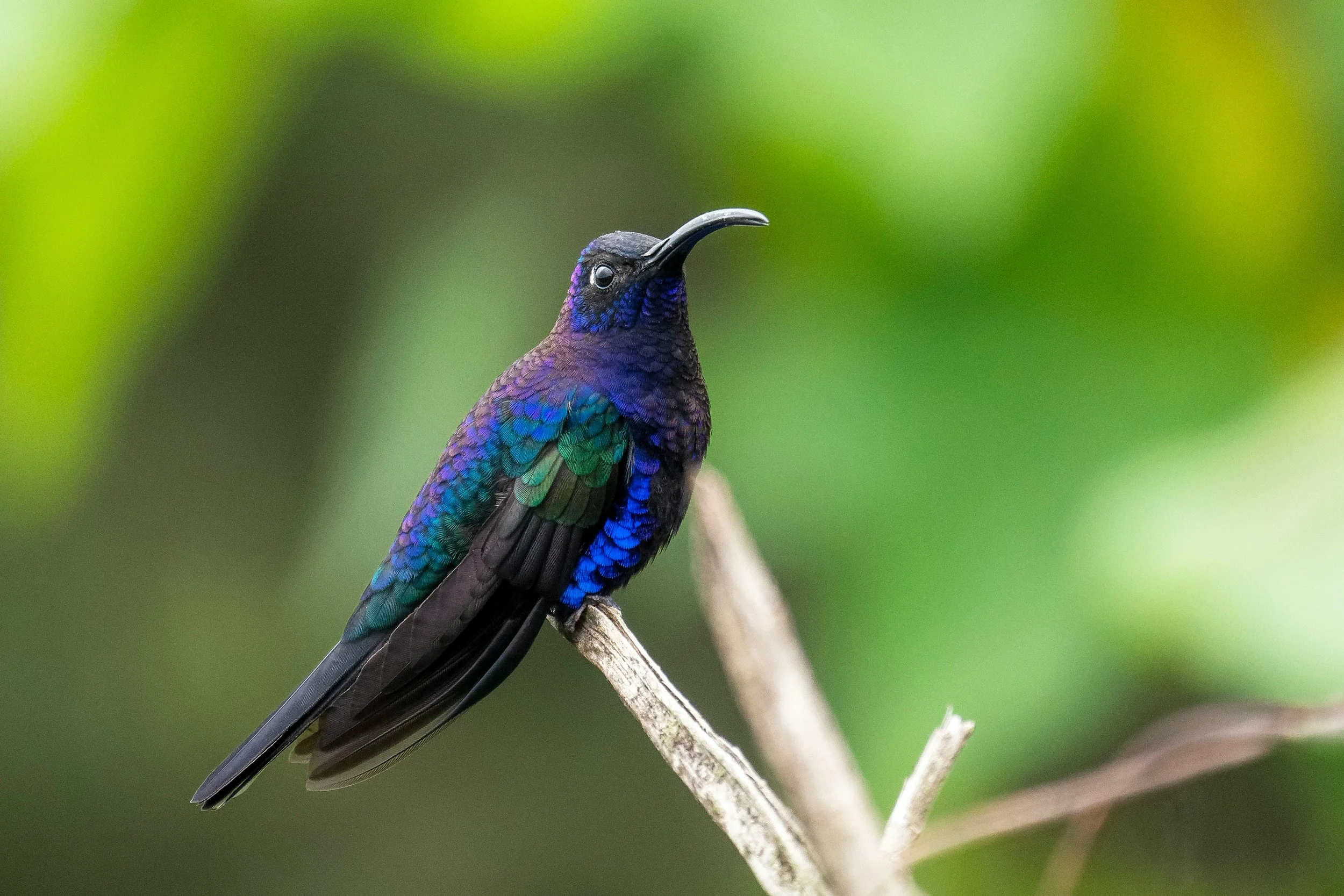
Photo by Wietse Jongsma
critical mussel habitat | sustainability tradeoffs | land & liberation | And More
Quick Look
News
Critical Habitat Protected for Four Mussel Species Across 17 Eastern, Midwestern States | Center for Biological Diversity
Every business depends on nature. Fewer than 1% disclose this relationship | Oxford Economics
Our Power, Our Planet: Young Leaders Advancing Human-Nature Relationships | Human Development Reports
The Indigenous Women Leading Brazil’s Rainforest Recovery | The Rockefeller Foundation
Research
Capturing the dimensions of coral reef biodiversity | Ecological Indicators
Global interventions show synergistic but uneven positive impacts on climate and biodiversity | One Earth
Sustainability trade-offs at the nexus of solar energy, agriculture, and biodiversity | Geography and Sustainability
What practices constitute ‘biodiversity-friendly’ dairy farming? Farmers’ perspectives and local context matter | Agriculture and Human Values
Rethinking intensification: Biodiversity-inclusive management sustains coconut yields | Plants People Planet
Dark extinctions warrant recognition in Red Lists | Nature Reviews Biodiversity
Radical Ecology
Land and Liberation: 2026 Summer Intensive Course | The Institute of Social Ecology
Metabolic Rifts: ‘Engaging with science to understand history and the world’ | Climate and Capitalism
News
Critical Habitat Protected for Four Mussel Species Across 17 Eastern, Midwestern States | Center for Biological Diversity
Thanks to litigation from the Center for Biological Diversity, nearly 4,000 miles of river mussel habitat is now protected by the U.S. Fish and Wildlife Service. The protected rivers, stretching from Minnesota to Alabama, will provide clean water for four species of mussels are highly sensitive to water quality and were added to the Endangered Species Act in 2012.
Every business depends on nature. Fewer than 1% disclose this relationship | Oxford Economics
Despite the fact that virtually all businesses directly or indirectly rely on and impact biodiversity, very few of them acknowledge or plan for this. A recent panel at Oxford’s Saïd Business School discussed the biodiversity dependencies of economic activity and included members from academia, finance, mining, and the water industry.
Our Power, Our Planet: Young Leaders Advancing Human-Nature Relationships | Human Development Reports
“The choices made today will shape whether the coming decades are defined solely by planetary pressures or by renewed pathways of reconnection in which people and the planet can thrive together. UNDP’s flagship Human Development Report (HDR) 2026 explores how people’s aspirations and agency, alongside reciprocal human–nature relationships, shape development outcomes, and how they can be better reflected in development thinking and practice. The Report draws on extensive research and analytical work, incorporating diverse perspectives from across regions and sectors, including those of young people.”
The Indigenous Women Leading Brazil’s Rainforest Recovery | The Rockefeller Foundation
Guajajara Indigenous community, in the Araribóia region of Maranhão, north-eastern Brazil, is feeling the impacts of environmental destruction. 70% of their land was impacted by forest fires in 2024 partially caused by illegal logging and cattle ranching. In the article, Guajajara community members discuss witnessing the degradation of the rainforest, violence from loggers, and loss of their lands.
more from brief ecology

Research
Capturing the dimensions of coral reef biodiversity | Ecological Indicators
Abstract:
Biodiversity is inherently multidimensional, combining information on the numbers, abundances, taxonomy, and traits of species. Quantifying biodiversity with finite sets of metrics is an ongoing challenge, relying on essential variables with high complementarity, accessibility, and ecological importance. Here, we explore the large-scale multivariate structure of coral reef biodiversity, identifying metrics that represent major dimensions of variation in reef composition and function. Focusing on two large-scale datasets from The Great Barrier Reef and Coral Sea, we conduct a range of dimensionality-reduction analyses to explore how 18 widely accessible reef biodiversity metrics are related and the multivariate information represented by each metric. We identify six variables that describe major components of variation in reef biodiversity. These are (1) hard coral cover, (2) fish biomass, (3) structural complexity, (4) coral functional composition, (5) fish functional composition, and (6) algal composition. These complementary metrics accurately predicted the multivariate structure of long-lists of biodiversity metrics (n = 14, Mantel r = 0.76), and captured large-scale information on species richness, size structure, shelter volume, non-coral sessile groups, and coral-fish interactions. Functional composition estimated via the abundances of 5–10 major functional groups was effective in predicting multi-trait functional diversity. While these six biodiversity dimensions capture a small component of coral reef species richness, they represent large components of reef biomass, habitat structure, and ultimately ecosystem functions and services. Moreover, these metrics are optimized to have high complementarity and accessibility, making them appropriate for use in a range of biodiversity conservation practices with diverse goals.
Global interventions show synergistic but uneven positive impacts on climate and biodiversity | One Earth
Abstract:
Climate change and biodiversity loss are two of the most pressing and interconnected sustainability challenges. A one-sided focus on either climate change mitigation or biodiversity conservation may undermine other sustainability goals. Although global scenarios are widely used to explore pathways addressing both challenges, overarching evidence on their synergies and trade-offs remains limited. This meta-analysis examines the results of the most up-to-date global intervention scenarios that address climate change and biodiversity. We show that most scenarios prioritize climate change mitigation. While interventions had a synergistic effect on climate and biodiversity, they were more effective at mitigating climate change. Highly synergistic scenarios frequently include measures in agriculture, forestry and other land uses, and the food sector. These findings indicate that climate-focused approaches alone are insufficient to halt biodiversity loss. More integrated assessments using diverse metrics and models are needed to identify transformative pathways supporting climate, biodiversity, and other sustainability goals.
Sustainability trade-offs at the nexus of solar energy, agriculture, and biodiversity | Geography and Sustainability
Abstract:
A rapid transition to renewable energy is necessary for achieving global decarbonization targets, but siting conflicts, particularly beyond the built environment, remain a key barrier to sustainable development. At the same time, climate-induced pressures on biodiversity intensify the socio-ecological trade-offs within the energy-agriculture-biodiversity nexus. Using New York State as a case study, we assess the geographic implications of utility-scale solar energy development under competing land-use priorities. We apply a mixed-integer linear programming (MILP) optimization model to evaluate solar buildout across three distinct scenarios: minimizing cost, prioritizing agricultural preservation, and conserving biodiversity, employing a lexicographic hierarchy to enforce a strict ordering of stakeholder priorities. Results indicate that New York can meet its mid-century decarbonization goals by deploying 46,216 MWdc of solar energy, however, achieving this goal comes with considerable land-use trade-offs. A cost-minimizing scenario disproportionately targets pasture and hay lands (>40,000 ha), nearly half of which overlap with grassland bird habitat and biodiversity writ large. Prioritizing agriculture spares ∼80 % of farmland but creates potential for deforestation of over 41,000 ha. Biodiversity-conscious siting avoids ecologically sensitive areas and increases the annualized total costs by 0.17 %, indicating economic feasibility. Our findings highlight the need for spatially informed, integrative land-use strategies that reconcile climate goals with ecological and agricultural values. By linking geospatial optimization with socio-ecological criteria, this work contributes a transferable framework to inform just and ecologically responsible energy transitions in multifunctional landscapes, offering new insights into how geography can advance sustainable development.
What practices constitute ‘biodiversity-friendly’ dairy farming? Farmers’ perspectives and local context matter | Agriculture and Human Values
Abstract:
Farmers vary greatly in how they see themselves and their profession in relation to biodiversity. However, despite its relevance for conservation, little is known about how this informs their ideas of what constitutes ‘biodiversity-friendly’ farming. With this study, we aimed to explore this interplay. We interviewed dairy farmers in two areas in the Netherlands and two in the French Massif Central. In these interviews, we asked farmers general questions about their relationship with biodiversity, as well as which farming practices they consider biodiversity-friendly. Earlier analysis of the interviews revealed six narratives on the farming-biodiversity relationship: ‘farming WITH biodiversity’, ‘farming FROM biodiversity - valorising what is there’, ‘farming FROM biodiversity - innovating for sustainability’, ‘farming FOR biodiversity’, ‘farming SEPARATE from biodiversity - out of necessity’, and ‘farming SEPARATE from biodiversity - out of conviction’. Here, we analysed patterns in the practices identified across these six interview sets. We found a spectrum of perspectives, from farmers emphasising overall moderation of production intensity and local knowledge (‘WITH’, ‘FROM - valorising what is there’, ‘SEPARATE - out of necessity’) to those emphasising eco-efficient production and/or conservation on spared land, with a stronger focus on exogenous knowledge (‘FROM - innovating for sustainability, ‘FOR’, ‘SEPARATE - out of conviction’). We argue that this diversity in ideas about what biodiversity-friendly farming entails can be an asset in achieving biodiversity goals, and that to allow for such diversity, conservation initiatives should avoid catering to only a narrow subset of conceptualisations of biodiversity-friendliness.
Rethinking intensification: Biodiversity-inclusive management sustains coconut yields | Plants People Planet
Abstract:
Coconut palm expansion in West Africa will shape rural livelihoods and ecosystems. Our findings show that intensive practices reduce beneficial soil fungi and increase pathogens, threatening long-term productivity. Lower-intensity management that retains ground vegetation can sustain or boost yields while improving soil health. With typical planting densities and prices, these practices could generate an additional USD 800–1,200 per hectare annually, strengthening farmer income. Promoting biodiversity-friendly management and intercropping can enhance resilience, support food security and reduce pressure on natural habitats, offering a practical pathway to align agricultural development with environmental sustainability.
Dark extinctions warrant recognition in Red Lists | Nature Reviews Biodiversity
Abstract:
Poorly documented species extinctions (‘dark extinctions’) are absent from the International Union for Conservation of Nature Red List — the ‘gold standard’ for assessing extinction risks. This absence has substantial consequences for current attempts to quantify the full scale of extinctions. We propose methodological improvements to explicitly include dark extinctions in the Red List.
Radical Ecology
Land and Liberation: 2026 Summer Intensive Course | The Institute of Social Ecology
“This year’s social ecology summer intensive course is being hosted in partnership with Native Roots Networkand the Peoples’ Network for Land and Liberation. From June 5 to 11, we will gather at Native Roots Network’s Traditional Ecological Knowledge land lab Wenem To•s in Shasta County, just outside Redding, California. This is an in-person, in-depth gathering in which participants dive headfirst into the ideas and practices of social ecology: grassroots organizing, ecological philosophy, direct democracy, and revolutionary social transformation.”
Metabolic Rifts: ‘Engaging with science to understand history and the world’ | Climate and Capitalism
Martin Empson reviews Ian Angus’s new book, Metabolic Rifts: Capitalism’s Assault on the Earth System, from Monthly Review Press.